

Updated on May 4, 2026 by Ryan Koenig

Key Takeaways
1. Laser therapy for scars works by using focused light energy to break down damaged tissue, stimulate collagen production, and resurface the skin. It can improve the texture, color, and appearance of scars from acne, surgery, burns, and injuries.
2. The best results come from combination therapy, using different laser types across multiple sessions. No single laser treats every scar type equally.
3. Laser Service Solutions offers daily laser rentals for medical spas and dermatology practices that want to add scar treatment services without the cost of ownership. Delivery, setup, and training are included.
How Does Laser Therapy for Scars Work?
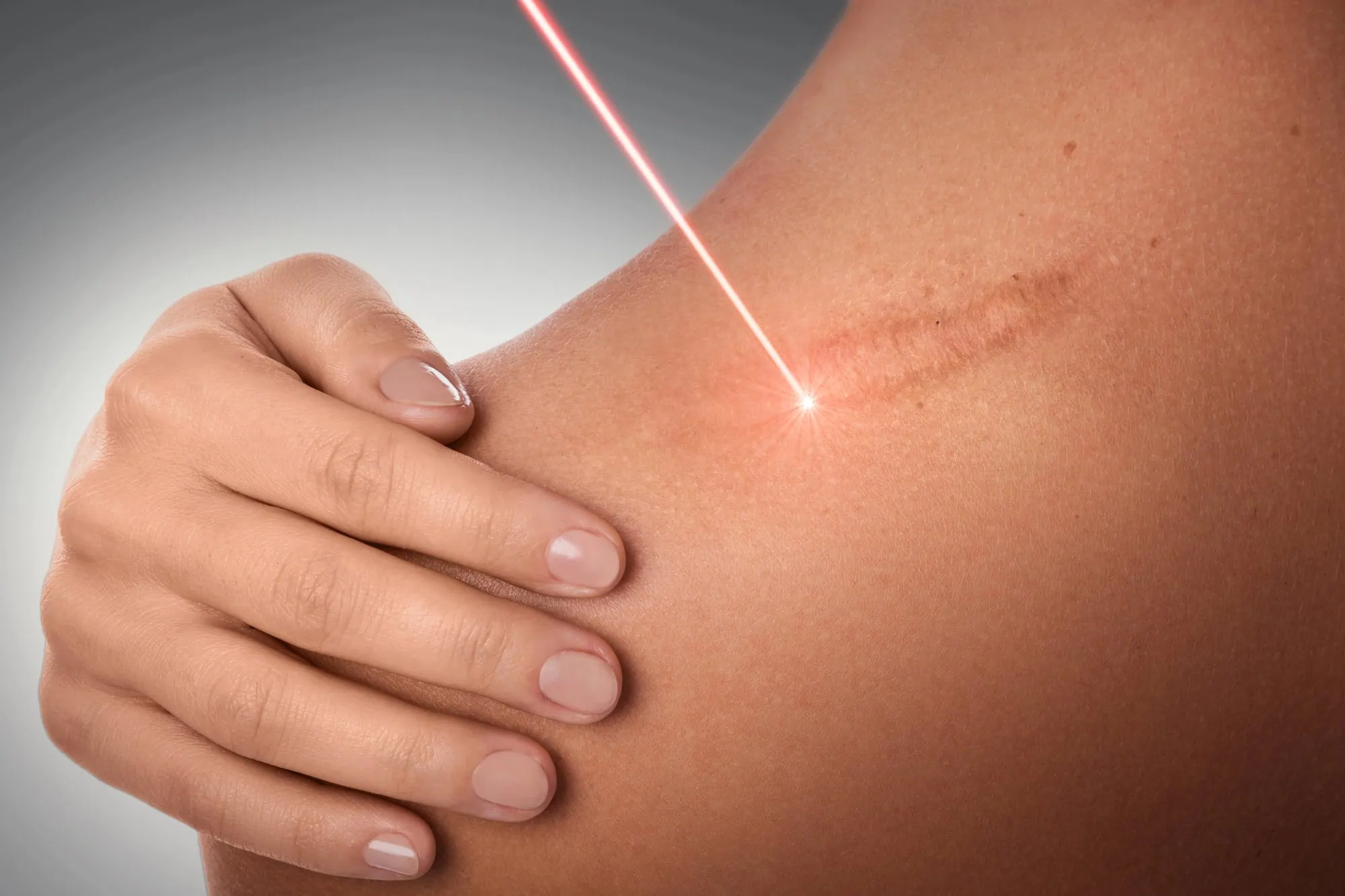
Laser therapy for scars uses concentrated beams of light to target damaged skin tissue. The laser energy breaks down scar tissue at a controlled depth while triggering the body’s natural healing response. This process stimulates new collagen production, which gradually replaces the scarred skin with smoother, healthier tissue.
The result is not instant. Scar remodeling happens over weeks and months as the skin rebuilds. Most patients see noticeable improvement after two to three sessions, with optimal results developing over three to six months.
There are two main categories of lasers used for scar treatment: ablative and non-ablative.
Ablative Lasers
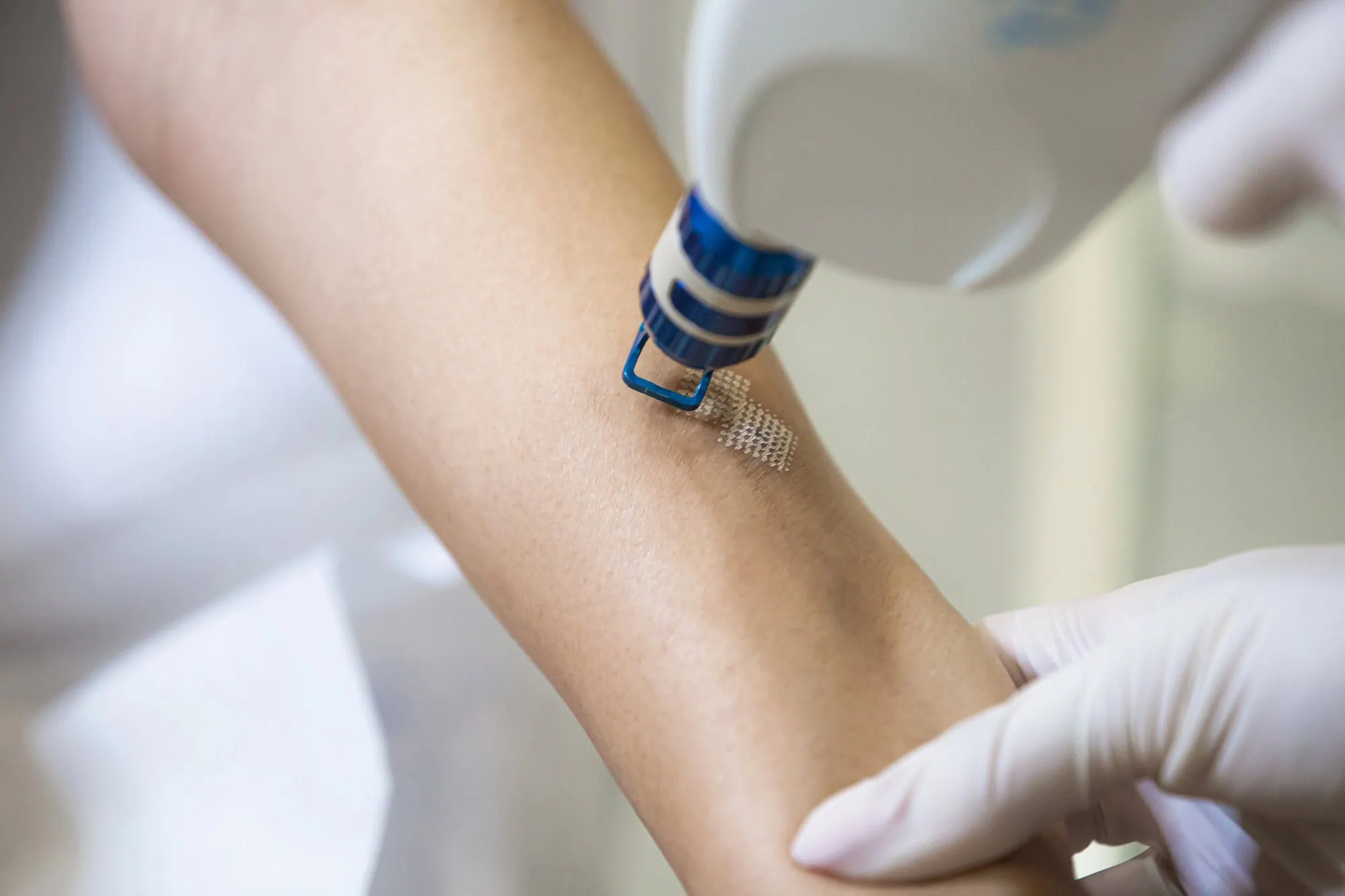
Ablative lasers remove the outer layers of damaged skin. The body then produces new skin cells to replace what was removed. This approach is more aggressive and delivers more dramatic results per session. Recovery typically takes five to ten days, with redness lasting up to several weeks, depending on the depth of treatment.
The most common ablative lasers for scars are the CO2 (carbon dioxide) laser and the Erbium YAG laser. Fractional versions of these lasers treat a fraction of the skin at a time, leaving surrounding tissue intact. This speeds up healing and reduces downtime compared to full-field ablation. The fractional approach has become the standard for scar treatment because it balances effectiveness with a manageable recovery period.
Ablative lasers are most effective for deep scars, raised scars, and textured acne scars. They are also the best option when a single session needs to produce the most noticeable improvement.
Non-Ablative Lasers
Non-ablative lasers heat the tissue beneath the skin surface without removing it. They stimulate collagen remodeling from the inside. Recovery time is shorter, but more sessions are typically needed to achieve similar results.
These are a better fit for patients who cannot afford significant downtime or who have darker skin tones where ablative lasers carry a higher risk of pigmentation changes.
Pulsed Dye Lasers (PDL)
Pulsed dye lasers target the blood vessels within scar tissue. They are especially effective for red or pink scars, hypertrophic scars, and keloids. By reducing the vascularity of the scar, PDL softens the tissue, reduces itching and tightness, and flattens raised areas over time.
The Candela VBeam Perfecta is one of the most widely used pulsed dye lasers for scar treatment. It is available for daily rental through Laser Service Solutions.
Which Laser Is Best for Each Type of Scar?
There is no single best laser for every scar. The right choice depends on the scar type, depth, color, location, and the patient’s skin tone. Here is how the most common scar types match to laser technology.
| Scar Type | Best Laser Option | How It Helps |
|---|---|---|
| Acne scars (pitted/atrophic) | Fractional CO2 or Erbium YAG | Resurfaces the skin and stimulates deep collagen remodeling to fill in pitted areas. |
| Hypertrophic scars (raised) | Pulsed dye laser (PDL) | Reduces redness and vascularity. Softens and flattens the scar tissue over multiple sessions. |
| Keloid scars | PDL combined with steroid injections | Reduces blood supply to the keloid. The combined approach prevents regrowth and softens the tissue. |
| Surgical scars | Fractional non-ablative laser | Stimulates collagen from beneath the surface. Improves texture and blending with surrounding skin. |
| Burn scars | Fractional CO2 | Breaks down rigid scar tissue. Restores flexibility and improves surface texture. |
| Red or pink scars | Pulsed dye laser | Targets hemoglobin in blood vessels. Reduces discoloration and flattens the scar. |
For the best results, many dermatologists use a combination approach. A systematic review published in Lasers in Medical Science found that combining ablative fractional lasers with pulsed dye laser produced greater effectiveness than either method alone, with no severe adverse reactions noted.
How Many Sessions Does Laser Scar Treatment Take?
Most scars require multiple treatment sessions. A single session can produce visible improvement, but meaningful, lasting results typically require three to six sessions spaced four to eight weeks apart.
The number of sessions depends on the scar’s severity, type, and age. Older, mature scars may need more sessions but still respond well. Even scars that are decades old can show improvement with modern fractional laser technology. Newer scars, particularly surgical and injury scars, can begin laser treatment as early as three months after the wound has healed.
After each session, the skin goes through a healing phase. Redness, swelling, and mild peeling are common for ablative treatments. Non-ablative treatments have minimal downtime. Patients should avoid sun exposure during recovery and follow their provider’s aftercare instructions closely.
For medical spas and dermatology practices, scar treatment packages of four to six sessions are the most common offering. Pricing typically ranges from $200 to $500 per session depending on the treatment area and laser type. Bundling sessions into packages improves patient compliance and practice revenue.
According to the American Academy of Dermatology, laser treatment can make scars less noticeable but does not remove them completely. Setting realistic expectations with patients is an important part of the consultation process.
8 Things to Know About Laser Therapy for Scars
Why Combination Therapy Produces Better Scar Results
No single laser addresses every aspect of a scar. A deep, discolored, raised scar has three distinct problems: texture, color, and volume. Each one responds to a different wavelength and mechanism. Treating all three with one device leaves at least one dimension undertreated.
Combination therapy means using two or more laser types, or combining laser treatment with injectables, in the same session or across a series of sessions. This approach targets the scar from multiple angles and consistently produces better patient outcomes.
Common combinations include:
- Fractional CO2 + PDL: Resurfaces the texture while reducing redness and vascularity.
- Fractional laser + steroid injection: Flattens keloids and hypertrophic scars while preventing regrowth.
- Fractional laser + cosmetic fillers: Fills in pitted acne scars while stimulating long-term collagen production underneath.
Laser Service Solutions has published a detailed overview of combination therapy for laser scar removal that covers the clinical approach in more depth.
Which Lasers Does Laser Service Solutions Offer for Scar Treatment?
If you run a medical spa or dermatology practice and want to offer scar treatment without purchasing equipment outright, renting is the most practical path. Laser Service Solutions provides daily laser rentals with delivery, setup, and staff training included.
Here are the devices most relevant to scar treatment available through LSS:
- Candela VBeam Perfecta: Pulsed dye laser. Ideal for vascular scars, keloids, redness, and skin rejuvenation.
- Alma Harmony XL: Multi-platform system with IPL, fractional resurfacing (iPixel), and ClearLift modules. Handles a wide range of scar types.
- LaserOptek PicoLO Premium: Picosecond laser for scar correction, tattoo removal, and skin rejuvenation.
- Lumenis UltraPulse CO2: Versatile for both fully ablative and fractional resurfacing and is relied on for addressing small blemishes and complex lesions.
Renting allows you to offer scar treatments on demand without the six-figure investment of buying a laser system. You get the latest technology, maintenance is covered, and you can switch devices as your treatment menu evolves. If a device malfunctions during a rental, LSS technicians handle the repair at no extra cost.
For practices that are testing scar treatment as a new service line, renting removes the financial risk entirely. You can schedule dedicated scar treatment days, market the service to existing patients, and gauge demand before committing to a purchase. LSS offers rentals across Pennsylvania, New Jersey, New York, Delaware, Maryland, and Virginia.
If you decide to add a permanent device later, Laser Service Solutions also sells pre-owned and refurbished laser equipment from top brands. Every unit is cleaned, calibrated, and tested before delivery.
What You Should Do Next
Scar treatment is one of the fastest-growing segments in aesthetic medicine. Patients are actively seeking providers who offer laser-based scar revision. If your practice does not currently offer it, renting is the lowest-risk way to start.
- Evaluate your patient demand. Are clients asking about acne scar treatment, surgical scar revision, or keloid management? Knowing the scar types you will treat most helps determine which laser to rent first.
- Start with a versatile platform. The Alma Harmony XL or Candela VBeam Perfecta covers the widest range of scar types in a single device.
- Contact Laser Service Solutions to set up a rental. Daily rental terms mean you can schedule scar treatment days around existing appointments. Delivery, setup, training, and maintenance are all included. Call (856) 853-7555 or request a quote online.
FAQs