

Updated on May 4, 2026 by Ryan Koenig

Key Takeaways
1. Downtime ranges from zero days to two weeks depending on the laser type. Ablative lasers require the most recovery. Non-ablative and pulsed dye lasers require the least.
2. The biggest factor in patient satisfaction is not the laser itself. It is whether the provider set clear expectations before treatment. Patients who understand the recovery timeline in advance are far more likely to complete their full course.
3. Laser Service Solutions offers daily laser rentals with training included so your staff can confidently guide patients through every phase of treatment and recovery.
1. Not All Laser Scar Treatments Require the Same Downtime
This is the most important thing patients and providers need to understand. The word “laser” covers a wide range of devices with very different recovery profiles.
Here is how the most common scar treatment lasers compare:
| Laser Type | Downtime | What Patients Experience | Best For |
|---|---|---|---|
| Fractional CO2 | 7 to 14 days | Redness, swelling, oozing, peeling. Feels like a severe sunburn. | Deep acne scars, burn scars, textured scarring |
| Erbium YAG | 5 to 7 days | Similar to CO2 but less intense. Faster healing, less redness. | Moderate acne scars, surgical scars |
| Non-ablative fractional | 1 to 3 days | Mild redness and slight swelling. Most patients resume normal activity the next day. | Mild scars, maintenance, darker skin tones |
| Pulsed dye laser (PDL) | 0 to 2 days | Possible bruising that fades in days. Minimal peeling. | Red or pink scars, keloids, hypertrophic scars |
| Picosecond laser | 1 to 3 days | Mild redness, micro-swelling. Very little visible peeling. | Scar correction, pigmented scars, skin rejuvenation |
The tradeoff is consistent: more aggressive lasers produce more dramatic per-session results but require longer recovery. Gentler lasers need more sessions, but let patients get back to life faster.
2. Ablative Recovery Follows a Predictable Week-by-Week Pattern
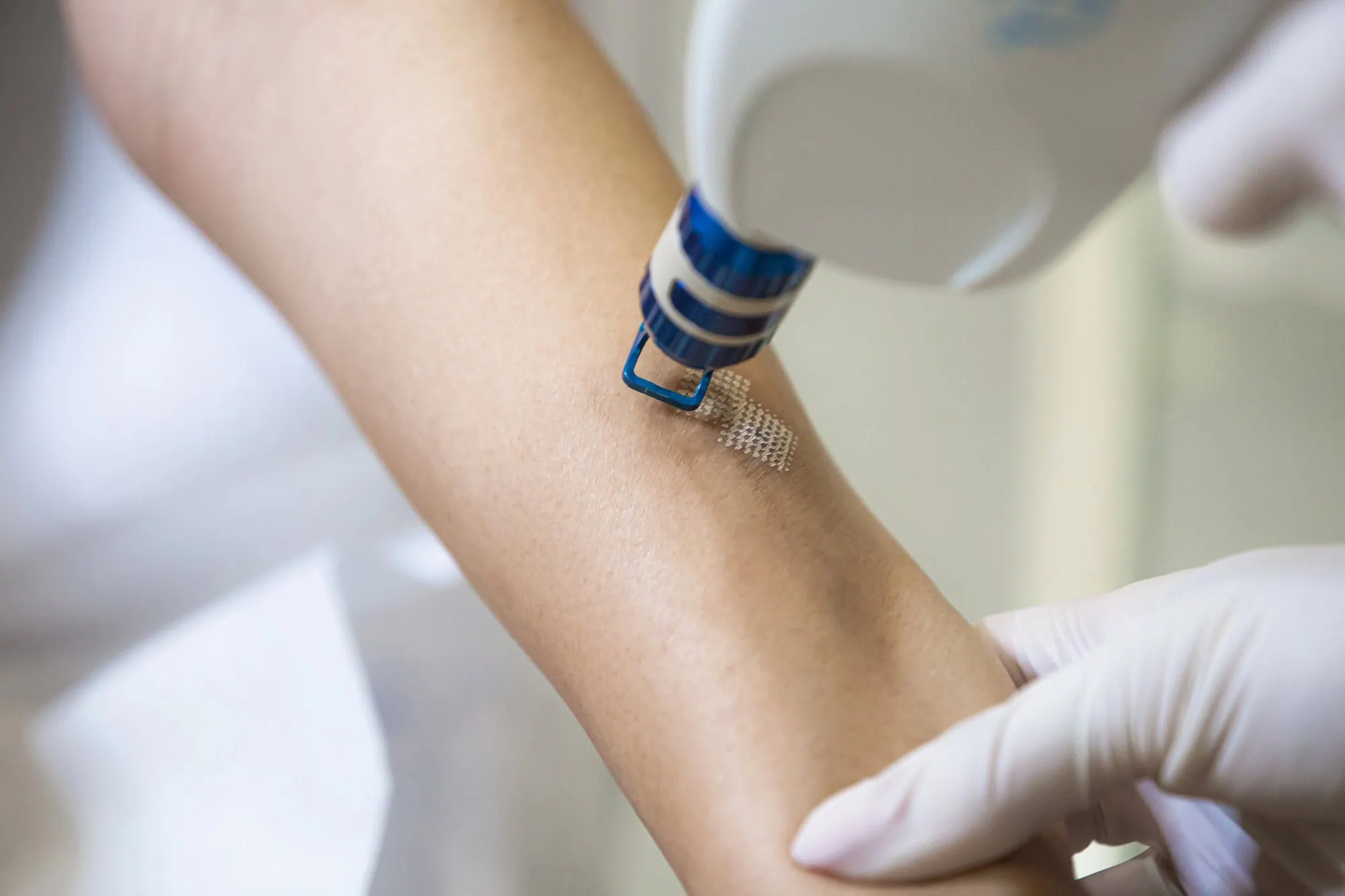
For the most intensive scar treatments (fractional CO2), the healing timeline is well-documented. According to the American Society of Plastic Surgeons, CO2 laser resurfacing generally requires up to two weeks of recovery, while Erbium laser resurfacing takes about one week.
- Days 1 to 3: Skin feels hot, tight, and raw. Swelling peaks within 48 hours. Oozing is normal. Ice packs and barrier ointments manage discomfort.
- Days 4 to 7: Oozing stops. Skin dries and peels. Patients must not pick at peeling skin. Pulling it off early causes scarring or pigmentation changes.
- Days 7 to 14: New pink skin appears underneath. Most patients feel comfortable returning to work with makeup. Strenuous exercise should wait another week.
- Weeks 3 to 12: Redness fades gradually. Collagen remodeling continues for three to six months. This is when the real improvement becomes visible.
Non-ablative treatments compress this entire timeline. Most patients experience mild redness for a day and resume normal activities almost immediately.
3. Sun Exposure Is the Biggest Recovery Risk
UV exposure during recovery can cause permanent pigmentation changes. This is the single most important aftercare instruction. The American Academy of Dermatology states that if the sun hits treated skin before it heals, the patient can develop another scar.
Patients should use broad-spectrum mineral sunscreen (SPF 30 or higher) daily for at least four weeks after ablative treatment. Direct sun should be avoided entirely during the first two weeks. This is why many providers schedule ablative scar treatments during fall and winter when sun exposure is naturally lower.
4. One Session Is Rarely Enough
Most scars require three to six treatment sessions spaced four to eight weeks apart. A single session can produce visible improvement, but meaningful, lasting results develop over multiple sessions as collagen remodeling accumulates.
How many sessions? depends on the scar:
- Mild acne scars or discoloration: Two to three non-ablative sessions may be sufficient.
- Moderate textured acne scars: Three to five fractional sessions, either ablative or non-ablative.
- Deep pitted or boxcar scars: Four to six ablative sessions, sometimes combined with fillers or subcision.
- Hypertrophic or keloid scars: Three to six PDL sessions, often combined with steroid injections.
- Burn scars: Three to twelve sessions, depending on severity. Earlier treatment produces better outcomes.
Even mature scars that are decades old can respond to modern fractional laser technology. Earlier intervention generally produces better results, but it is never too late to start. For pricing, most practices charge $200 to $500 per session, depending on the treatment area and laser type.

YAG Lasers for Acne Treatment
5. The Right Aftercare Protocol Makes or Breaks Results
Recovery compliance directly affects outcomes. Patients who follow aftercare instructions heal faster and see better results. Here is what every provider should communicate before treatment:
- Moisturize constantly. Petroleum-based ointments for the first few days after ablative treatment. Then transition to a gentler moisturizer. Dry, tight skin heals slower.
- Do not pick at peeling skin. This is the most common patient mistake. It disrupts healing and increases scarring risk.
- Pause active skincare ingredients. Retinols, AHAs, BHAs, and vitamin C serums should be stopped for at least two weeks after ablative treatment.
- Avoid heat and sweat. Hot showers, saunas, and intense exercise should be avoided for one to two weeks after ablative treatment.
Practices that send patients home with a printed recovery guide and a basic aftercare kit (barrier ointment, gentle cleanser, mineral sunscreen) see better compliance and fewer panicked post-treatment calls.
6. Combination Therapy Changes the Downtime Equation
Many dermatologists combine laser types for better scar outcomes. A common approach is fractional CO2 for texture, followed by pulsed dye laser for redness in the same treatment series. Some providers deliver both in the same session. Others alternate between devices across sessions.
When lasers are combined in a single session, the recovery profile follows the most aggressive device used. If the session includes ablative resurfacing, expect ablative downtime regardless of what else was added. If the combination is entirely non-ablative and PDL, downtime stays minimal.
For practices building a scar treatment menu, this is important for scheduling. A “combination scar day” using both an Alma Harmony XL and a Candela VBeam Perfecta can treat a wide range of patients in a single rental period. The provider selects the right device and settings for each patient based on their scar type, skin tone, and downtime tolerance.
For a deeper look at how combination approaches improve scar outcomes, see our guide to laser scar removal and combination therapy.
7. Patients Quit When Expectations Are Not Set Properly
This is the insight most competitor articles miss entirely. The biggest threat to a scar treatment program is not the laser, the price, or the downtime. It is patient dropout after the first session.
A patient books excitedly after a consultation. They have their first ablative session. On day three, they see peeling and redness. Nobody told them this was normal. They assume something went wrong. They skip the follow-up.
That is a lost patient and lost revenue. It is entirely preventable.
Providers who walk patients through the week-by-week recovery timeline before treatment see dramatically higher completion rates. Here is what works:
- Show before-and-after photos that include the healing phase, not just the final result. Patients need to see what day three and day seven actually look like.
- Give them a printed day-by-day recovery card. Patients who can see where they are in the timeline feel more in control.
- Schedule a brief check-in call on day three or four. This is when anxiety peaks. A two-minute call prevents a cancellation.
- Book the next session before the patient leaves. Patients who leave without a follow-up appointment are far less likely to return.
8. Renting Lets You Offer the Right Laser for Every Scar Type
Different scars respond to different wavelengths. A practice that owns only one laser is limited to one treatment approach. Renting gives you access to the full range without the capital commitment.
Laser Service Solutions offers daily laser rentals with delivery, setup, and staff training included. Devices available for scar treatment include:
- Candela VBeam Perfecta: Pulsed dye laser for vascular scars, keloids, and redness. Minimal patient downtime.
- Alma Harmony XL: Multi-platform system with ablative, non-ablative, and IPL modules. Covers the widest range of scar types.
- LaserOptek PicoLO Premium: Picosecond Nd: YAG for scar correction and skin rejuvenation.
- Lumenis UltraPulse CO2: Versatile for both fully ablative and fractional resurfacing and is relied on for addressing small blemishes and complex lesions.
Rentals are available across Pennsylvania, New Jersey, New York, Delaware, Maryland, and Virginia. If you decide to add a permanent device later, LSS also sells pre-owned and refurbished laser equipment.
What You Should Do Next
- Match the laser to the patient’s downtime tolerance. Offer non-ablative or PDL for patients who need minimal recovery. Reserve ablative CO2 for patients ready for a more aggressive approach.
- Build aftercare into the consultation. Walk patients through the recovery timeline before treatment. Give them a printed guide and an aftercare kit.
- Contact Laser Service Solutions to rent the right device. Daily terms let you schedule scar treatment days around patient demand. Call (856) 853-7555 or request a quote online.
FAQs