
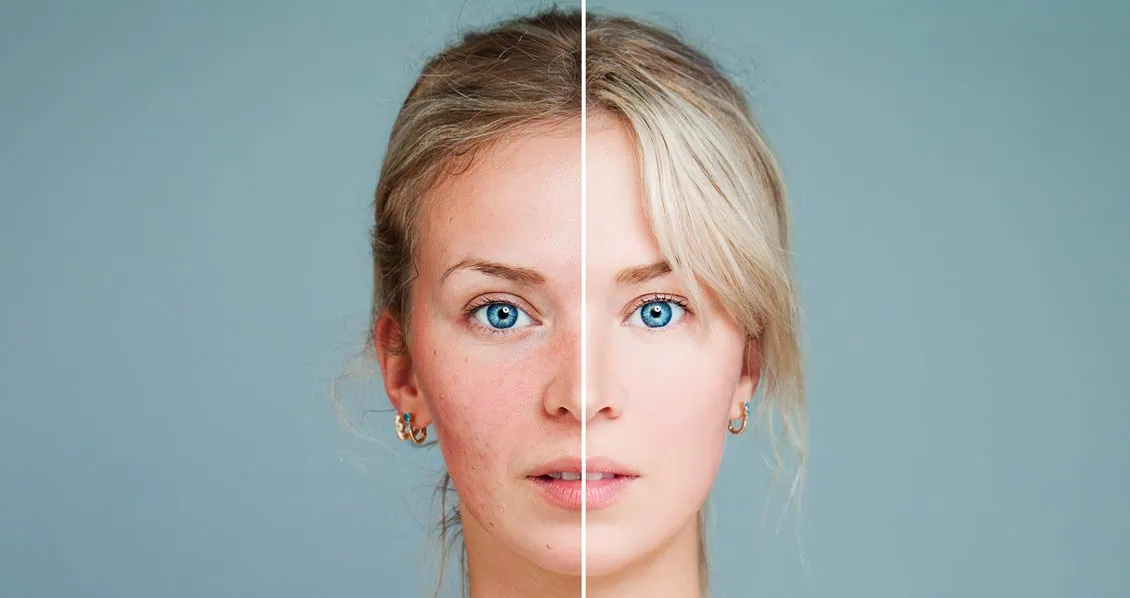


Updated on August 21, 2026 by Ryan Koenig

Key Takeaways
1. The 595 nm pulsed dye laser, including the Candela Vbeam Perfecta, is a leading option for persistent facial redness and visible blood vessels associated with rosacea.
2. IPL can also improve vascular rosacea and should not be dismissed as ineffective. The right technology depends on the patient’s symptoms, skin type, vessel depth, and treatment goals.
3. Laser Service Solutions offers the Candela Vbeam Perfecta through daily rentals and as fully serviced pre-owned equipment.
What Is the Best Laser for Rosacea?
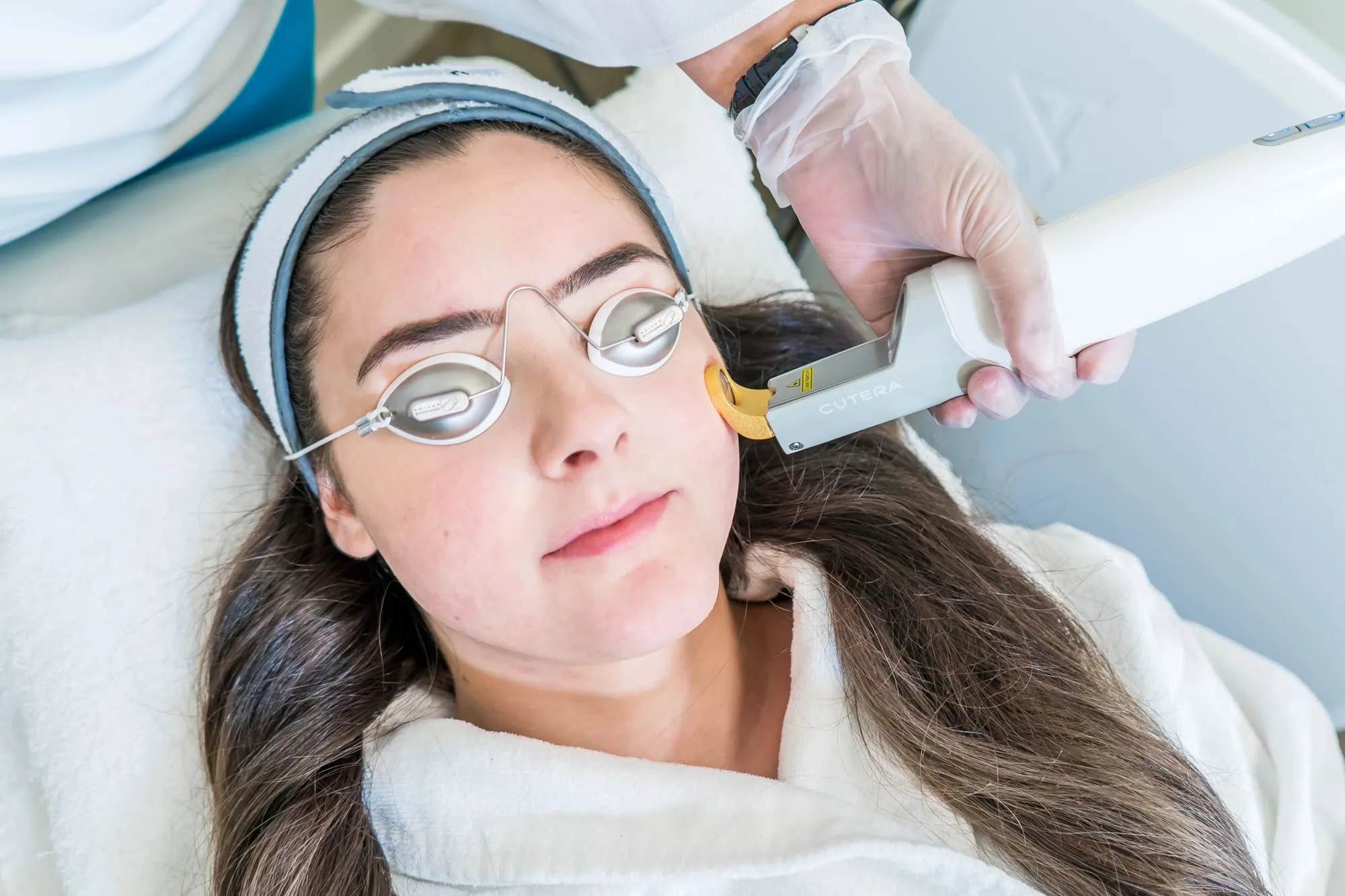
For practices primarily treating persistent facial redness and visible blood vessels, the 595 nm pulsed dye laser is one of the most established choices. The Candela Vbeam Perfecta is particularly well-suited to this work because it combines a vascular-specific wavelength with adjustable pulse durations, multiple spot sizes, and an integrated Dynamic Cooling Device.
The practical answer, however, depends on what the provider sees during consultation:
- Persistent background redness: A 595 nm pulsed dye laser or appropriately selected IPL may provide broad-area improvement.
- Fine superficial facial vessels: Vbeam Perfecta offers precise vascular targeting.
- Larger or deeper vessels: A long-pulsed 1064 nm Nd: YAG system may be more appropriate.
- Redness combined with pigmentation: IPL may give a practitioner greater treatment flexibility.
- Papules and pustules: Medication and skin care usually remain central because a vascular laser does not address every inflammatory feature.
- Ocular symptoms: The patient needs an appropriate medical assessment rather than routine facial laser treatment.
For a practice choosing one platform mainly for facial redness, telangiectasia, and other vascular lesions, the Candela Vbeam Perfecta is the strongest fit within LSS’s current inventory. Its usefulness also extends beyond rosacea to scars, port-wine stains, facial veins, and other vascular indications, which can help support equipment utilization.
The FDA lists rosacea and facial telangiectasia among the vascular indications for the Vbeam family. (FDA 510(k) summary) Practices can access the Candela Vbeam Perfecta as a daily rental to evaluate patient demand before purchasing a fully serviced pre-owned system.
Match the Device to the Rosacea Feature
Rosacea does not present the same way in every patient. Choosing a device by the dominant clinical feature is more useful than treating all facial redness with one platform.
| Patient concern | Technology commonly considered | LSS equipment option | Practical role |
|---|---|---|---|
| Persistent diffuse redness | 595 nm pulsed dye laser or appropriately selected IPL | Candela Vbeam Perfecta or Alma Harmony XL with a compatible IPL handpiece | Treats broader areas of persistent vascular redness |
| Fine facial telangiectasia | Pulsed dye laser or 532 nm KTP | Candela Vbeam Perfecta or a suitably configured Alma Harmony XL | Targets small, visible superficial vessels |
| Larger or deeper facial vessels | Long-pulsed 1064 nm Nd: YAG | Candela GentleMax | Reaches deeper vascular targets but requires conservative settings and careful patient selection |
| Mixed redness and pigmentation | IPL | Alma Harmony XL with the appropriate handpiece and filter | Gives practices greater flexibility when vascular and pigment concerns overlap |
| Papules and pustules | Medical therapy usually remains central | No device should be selected solely from this symptom | Laser treatment may reduce associated redness but may not control the inflammatory component |
| Ocular symptoms | Ophthalmic or dermatologic evaluation | Not a routine facial-laser indication | Requires appropriate medical assessment and an ocular-specific treatment plan |
| Thickened nasal skin | Ablative resurfacing or surgical treatment | A dedicated resurfacing platform selected by a qualified specialist | Requires tissue-remodeling or surgical treatment rather than a vascular-only device |
For practices that see mostly persistent redness and fine facial vessels, the Vbeam Perfecta offers the most direct match. A multipurpose system such as the Alma Harmony XL may make more sense when the clinic also treats pigmentation, acne, hair, and other aesthetic concerns.
The Candela GentleMax adds a 1064 nm Nd: YAG wavelength for deeper vascular targets while also supporting a wider range of indications.
Why Pulsed Dye Lasers Work for Vascular Rosacea
Pulsed dye lasers treat the vascular signs of rosacea by directing a controlled wavelength of light toward hemoglobin inside visible blood vessels. This process is known as selective photothermolysis, but the principle is straightforward: the laser heats the unwanted vessel more than the surrounding skin.
The treatment generally works in four stages:
- The laser delivers a 595 nm pulse. Oxyhemoglobin within the vessel absorbs much of this light.
- Light converts to heat. The controlled heat coagulates the targeted vessel while appropriately selected settings limit exposure to nearby tissue.
- The vessel becomes less visible. Over time, the body clears the treated vascular material, reducing the appearance of redness or telangiectasia.
- Cooling protects the skin. The Candela Vbeam Perfecta uses a Dynamic Cooling Device that releases a short cryogen spray before the laser pulse, helping protect the epidermis and improve patient comfort.
The ability to adjust pulse duration and spot size is particularly useful. Fine superficial vessels may require a different approach from broad, diffuse redness. The Candela Vbeam Perfecta supports several treatment spot sizes, allowing trained providers to tailor delivery to the vessel pattern, treatment area, skin type, and desired clinical endpoint.
This targeting is why pulsed dye technology remains an established option for persistent erythema and facial telangiectasia. The FDA identifies rosacea and facial telangiectasia among the vascular indications for the Vbeam family. (FDA 510(k) summary)
Patients should still understand that treatment controls visible vascular signs rather than curing rosacea. Treated vessels may fade, but new redness and vessels can develop as the condition changes. Trigger management, sun protection, medical therapy when indicated, and occasional maintenance may remain part of the long-term plan.

What Practitioners Need to Know about Pulsed Dye Lasers
Why Vbeam Perfecta Stands Out for Rosacea Services
The Candela Vbeam Perfecta is not simply another multipurpose aesthetic platform. It is a vascular-focused 595 nm pulsed dye laser, making its core technology directly relevant to persistent redness and facial telangiectasia.
| Vbeam Perfecta feature | Clinical value | Value to the practice |
|---|---|---|
| 595 nm pulsed dye wavelength | Targets oxyhemoglobin in visible vessels | Supports a clearly defined vascular-treatment service |
| Adjustable pulse duration | Adapts energy delivery to different vessel characteristics | Gives providers greater treatment flexibility |
| Spot sizes from 3 to 12 mm, depending on the installed optics | Supports individual vessels and broader areas of redness | Allows one platform to address different treatment areas |
| Dynamic Cooling Device | Helps protect the epidermis and improve comfort | Supports a more manageable patient experience |
| Streamlined touchscreen interface | Keeps treatment controls readily accessible | Helps trained teams maintain an efficient workflow |
| Multiple cleared indications | Extends use beyond rosacea | Creates more opportunities to keep the system productive |
Is IPL Effective for Rosacea Redness Treatment?
Yes. IPL can reduce persistent facial redness and visible blood vessels in appropriately selected patients. It is not technically a laser; it produces a broad spectrum of light that is narrowed through filters, while a pulsed dye laser delivers a specific vascular wavelength.
This distinction makes IPL different from PDL, but not inherently ineffective. A 2024 systematic review found that IPL improved rosacea symptoms in patients with Fitzpatrick skin types I through IV.
A separate 2024 meta-analysis involving four studies and 141 participants found favorable results with both IPL and PDL. Neither treatment demonstrated a clear advantage for achieving more than 50% clearance, although IPL produced a higher rate of improvement above 75% in the included studies. The limited sample means that results should be interpreted carefully.
PDL Versus IPL for Rosacea
PDL and IPL can both improve vascular rosacea, but they approach the problem differently. A pulsed dye laser delivers one vascular-focused wavelength, while IPL produces a broader range of light that is narrowed through filters. This affects targeting, versatility, patient selection, and how a practice may use the equipment beyond rosacea.
| Consideration | Pulsed dye laser | IPL |
|---|---|---|
| Light delivery | Delivers a defined wavelength, such as the Vbeam Perfecta’s 595 nm output | Produces broad-spectrum light narrowed through interchangeable filters |
| Primary target | Oxyhemoglobin within superficial vessels | Hemoglobin and, depending on the filter, melanin |
| Common rosacea use | Persistent redness and discrete facial telangiectasia | Diffuse redness, widespread fine vessels, and combined vascular and pigment concerns |
| Treatment precision | Highly vascular-specific | Covers broader areas with greater filter flexibility |
| Device example from LSS | Candela Vbeam Perfecta | Alma Harmony XL with an appropriate IPL handpiece |
| Purpura potential | Bruising or purpura is possible, particularly with certain shorter-pulse settings | Generally less associated with purpura, although redness and swelling may occur |
| Skin-type considerations | Still requires careful parameter selection and epidermal protection | Greater interaction with melanin makes tanning history, skin type, and filter selection especially important |
| Treatment flexibility | Best suited to vascular and related indications | Multipurpose platforms may also support pigment, acne, hair, and skin-remodeling services |
| Practice fit | Clinics building a dedicated vascular program | Clinics wanting one configurable platform for several aesthetic categories |
| Main limitation | Less versatile outside its supported vascular and dermatologic indications | Less vascular-specific and more dependent on filters, handpieces, and operator technique |
When Other Vascular Lasers May Be Considered
Vbeam Perfecta is a strong choice for diffuse redness and fine telangiectasia, but it is not the only vascular platform that may be considered. Some patients have vessels that differ in color, diameter, and depth, making a 532 nm KTP or long-pulsed 1064 nm Nd: YAG laser a better match for a specific target.
KTP Lasers for Superficial Red Vessels
A KTP laser emits 532 nm light, which is strongly absorbed by oxyhemoglobin. It may be useful for treating isolated, bright-red vessels close to the skin’s surface, particularly around the nose and cheeks.
However, 532 nm light also interacts more strongly with melanin than longer vascular wavelengths. Providers must carefully assess the patient’s Fitzpatrick skin type, recent tanning, background pigmentation, vessel depth, treatment history, and risk of pigment changes. KTP is therefore more commonly considered for lighter, untanned skin with clearly defined superficial vessels.
The precise platform also matters. A Q-switched 532 nm module is not interchangeable with a long-pulsed vascular KTP device simply because both produce the same wavelength. Practices considering a configurable system such as the Alma Harmony XL should confirm the installed handpiece, pulse format, and cleared vascular indications.
Long-Pulsed Nd: YAG for Deeper Vessels
The 1064 nm Nd: YAG wavelength penetrates more deeply and interacts less strongly with epidermal melanin than shorter wavelengths. It may be considered for larger, deeper, or blue-purple facial vessels that are not well matched to a superficial vascular laser.
LSS offers pre-owned 1064 nm platforms such as the compact Candela GentleYAG Mini and dual-wavelength Candela GentleMax. Their additional applications may also help practices maintain equipment utilization beyond facial vascular treatments.
Deeper penetration does not make Nd: YAG universally safer or more effective. Facial tissue can be vulnerable to excessive thermal exposure, so conservative settings, appropriate cooling, precise endpoints, and experienced operation are essential.
For widespread persistent redness and networks of fine superficial vessels, the 595 nm Vbeam Perfecta remains the more direct vascular option. KTP and Nd: YAG are better treated as targeted alternatives when vessel depth, size, or color calls for a different wavelength.
Should a Practice Rent or Buy a Vascular Laser?
The right choice depends on patient volume, scheduling needs, available capital, and the cost of keeping the equipment operational. Rental reduces early financial risk, while ownership offers greater scheduling control once demand becomes predictable.
| Practice situation | Rental may fit | Purchase may fit | Why |
|---|---|---|---|
| Testing patient demand | Yes | Not initially | Rental provides real booking and revenue data before a major investment |
| Treating a few vascular patients monthly | Yes | Possibly later | Patients can be grouped into scheduled treatment days |
| Avoiding a large upfront expense | Yes | No | The practice preserves capital for staffing, marketing, and other services |
| Offering occasional laser treatment for rosacea | Yes | Sometimes | Equipment is brought in only when enough patients are scheduled |
| Maintaining consistently high volume | Sometimes | Yes | Frequent rental costs may eventually approach the cost of ownership |
| Requiring unrestricted scheduling | No | Yes | Ownership allows treatments, follow-ups, and touch-ups without coordinating rental dates |
| Building a vascular specialty | Sometimes | Yes | A dedicated system supports regular availability and a broader vascular service line |
| Unsure which platform fits the patient base | Yes | Not initially | Renting allows the practice to evaluate different technologies before committing |
| Able to manage maintenance and downtime | Sometimes | Yes | Ownership includes responsibility for service, repairs, parts, and equipment availability |
Add Rosacea Treatment Without Buying First
A practice does not need to purchase a vascular laser before confirming patient demand. LSS offers daily aesthetic laser rentals with delivery, setup, and training, giving qualified providers access to the Candela Vbeam Perfecta without an immediate ownership commitment.
This model is particularly useful for:
- Practices launching their first vascular-treatment service
- Clinics with only a few rosacea patients each month
- Providers scheduling several patients on one dedicated treatment day
- Seasonal promotions or limited treatment programs
- Practices comparing equipment before purchasing
- Clinics that prefer logistical and maintenance support
Choose the Right Rosacea Platform With Laser Service Solutions
The best device depends on the vascular feature being treated. Vbeam Perfecta offers focused 595 nm pulsed dye technology for persistent redness and facial telangiectasia, while IPL and other vascular wavelengths may suit different vessel patterns or broader treatment goals.
The decision should also work for the practice. Patient volume, scheduling flexibility, staff training, maintenance support, and additional treatment indications all affect whether rental or ownership provides better value.
Here are the next three steps:
- Define the clinical need. Review how many patients present with persistent erythema, visible facial vessels, scars with vascular redness, and other appropriate indications.
- Compare the platforms. Evaluate wavelength, cleared indications, patient population, treatment versatility, training requirements, maintenance needs, and expected monthly use.
- Contact Laser Service Solutions. Test demand through a scheduled Vbeam Perfecta rental or ask about a fully serviced pre-owned system. Call 856-853-7555 to discuss availability, financing, parts, repairs, and ongoing support.
FAQs